

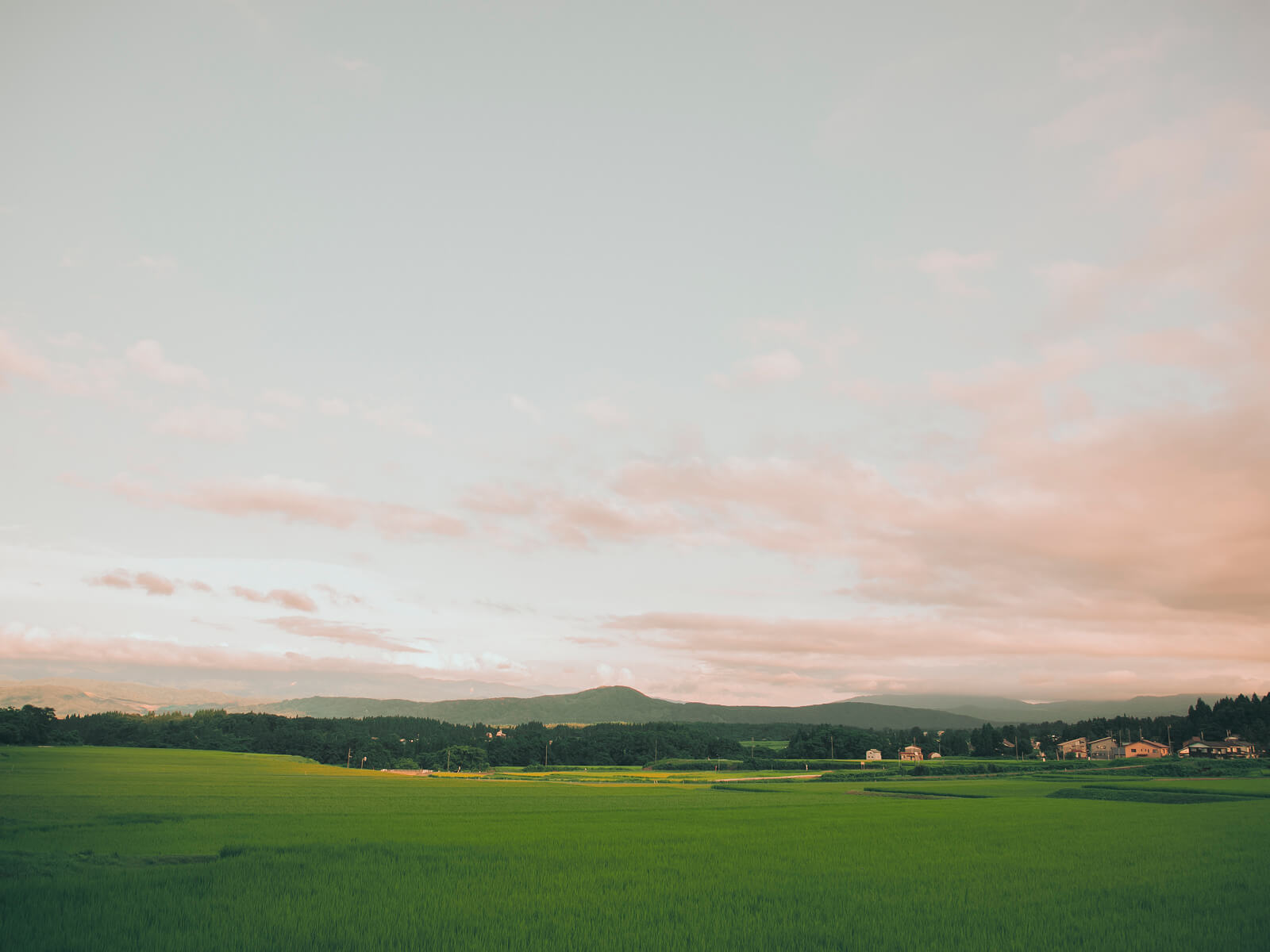
夏至を迎えて、妙高の里山も本格的な夏へと歩み始めました。
一年で最も昼が長いこの季節。ここ数日は梅雨とは思えないような晴天が続き、妙高でも日中は夏のような強い日差しに包まれています。新緑はより濃く深まり、田んぼを渡る風には、朝晩の涼やかさがほんのりと残っていて、里山らしい初夏の空気を感じさせてくれます。
田植えを終えたばかりの水田には、空や雲、山の稜線が鏡のように映り込み、あぜ道にはヒメジョオンやカタバミなどの小さな草花が静かに咲いています。
夕暮れどきにはカエルたちの合唱が響き渡り、日が長い分、夕食後に子どもと一緒に田んぼ道を散歩するような時間が生まれます。空の色がオレンジから紫へとゆっくりと移ろっていくそのひとときは、自然がつくり出す、何よりの贅沢です。
そんな日常を、ぜひ皆さまにも体験していただきたいと願っています。
この時期、水田のまわりでは草刈りが本格化します。勢いを増す雑草に負けじと、地域の方々が丁寧に手入れを進めています。獣害対策のため、電気柵を張る光景も見られ、これもまた、6月の里山ならではの暮らしの一部です。
人口が減少する中でも、手間を惜しまずに田んぼを守り続ける姿勢には、いつも頭が下がる思いです。
先日ご宿泊いただいたお客様から「味噌が絶品でした」とのお言葉をいただきました。
実はMAHORAで使用している味噌は、無農薬で育てた地元・西野谷産の大豆(というより、草ぼうぼうの畑で、ほぼ自然のままに育った豆)と、自家栽培のコシヒカリ(服部米蔵)から作った米麹を用いた、無添加の手作り味噌です。
味噌づくりは3年前に始めました。
最初の年に驚いたのは、麹づくりから始まる工程の大変さと、「安いから手作りする」のではなく、地域のお父さんお母さんたちが良質な素材に手間と愛情を込めて仕込む姿勢。そしてその味噌を、家族や友人に分け合う、あたたかな文化でした。
同じように仕込んでも、毎年仕上がりは少しずつ異なります。3年熟成の味噌もありますが、個人的には半年〜1年ほどのフレッシュな味噌が好み。現在MAHORA西野谷で使っているのは、昨年の3月に仕込んだものです。
ちなみに、味噌は冷凍保存がおすすめです。冷凍しても固まらず、発酵も止まるため、好みの状態を長く保てます。
湿気の多いこの時期には、こうした素朴な発酵食品のぬくもりが、心にも体にもじんわりと沁みわたります。土鍋でゆっくり炊いたごはんと合わせれば、朝のひとときがより豊かな時間になります。
お休みの日、子どもたちは雨の合間をぬって裏の水路で虫を探したり、庭を駆けまわったり。
大人たちは木陰に椅子を出し、本を読みながら、流れる雲や風の音に耳を澄ませます。
ここでは「何をするか」より、「どう過ごすか」が大切だということを、改めて感じさせてくれます。
6月下旬。裏庭の草もぐんぐん伸び、そろそろホタルの姿が見られる季節がやってきます。
晴れた夜には、星のきらめきと焚き火の灯りが、静けさの中にそっと優しい光を添えてくれます。
派手さはないけれど、しっかりとそこにある「光」が、里山の夏のはじまりを静かに知らせてくれます。
妙高の夏は、にぎやかではありません。でも、自然のリズムとともに、ゆっくりと進んでいきます。
そんな日々のなかに、ふとした喜びや発見が隠れている――
そう感じさせてくれる、夏至の頃の里山です。
Welcoming the Summer Solstice: Life in the Satoyama of Myoko
With the arrival of the summer solstice, the satoyama countryside of Myoko is slowly stepping into the heart of summer.
This is the season with the longest days of the year. Recently, we’ve had days of clear blue skies that feel more like summer than the rainy season. The greenery has deepened, and the breeze that flows over the rice fields still carries a hint of coolness in the mornings and evenings—capturing the essence of early summer in the satoyama.
In the freshly planted rice paddies, the sky, clouds, and mountain ridgelines reflect like a mirror. On the narrow paths between fields, wildflowers like fleabane and oxalis bloom quietly.
At dusk, a chorus of frogs fills the air. With the longer daylight hours, we often find time after dinner to stroll along the rice field paths with our children. The sky slowly shifts from orange to purple—a moment of quiet luxury only nature can offer.
It’s this kind of everyday magic that we hope many of you will come experience for yourselves.
Around the paddies, the grass-cutting season has begun in earnest. With weeds growing quickly, locals work hard to keep the fields in shape. You’ll also see electric fences being installed to protect against wildlife—just another part of satoyama life in June.
Even as the population declines, the people here continue to care for the land without hesitation. Their dedication to preserving the fields is something we deeply admire.
Recently, a guest told us that the miso we served was “absolutely delicious.”
In fact, the miso we use at MAHORA Nishinoya is completely handmade and additive-free—crafted from locally grown Nishinoya soybeans (cultivated naturally in what some might call overgrown fields!) and rice koji made from our own pesticide-free Koshihikari rice. We’ve been making this miso for three years now.
What surprised us in the beginning was how labor-intensive it was to start from the koji-making stage—and how, for the locals, miso isn’t made because it’s cheap, but because it’s a way to share care and love through food. Each batch, though made with the same process, turns out a little different every year.
Some miso is aged for three years, but personally, we prefer the fresh, bright flavor of miso aged between six months and a year. The miso we’re currently serving was made in March of last year.
Here’s a tip: miso keeps well in the freezer! It won’t harden and it stops fermenting—so you can preserve the flavor just the way you like it.
During this humid season, a warm bowl of rice with nourishing fermented foods brings a gentle comfort to both body and soul.
Pair it with rice cooked slowly in a donabe (clay pot), and mornings take on a whole new richness.
On days off, our children explore the stream behind the house for insects or run around in the garden between rain showers.
The adults bring out chairs into the shade, read books, and listen to the sound of passing clouds and wind.
Living here reminds us: it’s not about what you do, but how you spend your time.
Now, as June comes to a close, the backyard grasses grow taller, and soon we’ll begin to see fireflies dancing through the night.
On clear evenings, the soft glow of a campfire and the sparkle of stars gently illuminate the stillness around us.
There’s nothing flashy—just quiet, steady light that marks the beginning of summer in the satoyama.
Summer in Myoko is not loud or busy.
It moves gently, in tune with the rhythms of nature. And in those slow, peaceful days, there are always small joys and unexpected discoveries waiting to be found.
That’s what this season teaches us—right here in the satoyama, around the time of the summer solstice.
#MAHORA西野谷 #妙高の里山 #古民家のある暮らし #夏至の風景 #ホタルの季節 #手づくり味噌 #土鍋ごはん #自然と暮らす #里山時間 #slowtraveljapan #myokonature #satoyamalife #fireflyseason #countrysidestay #japaneselocalexperience